Layered Incentive Designs in Mobile Draw Platforms Shape User Loyalty Through Diverse Payment Pathways
Zoe Becker · Nov 24, 2026
Layered Incentive Designs in Mobile Draw Platforms Shape User Loyalty Through Diverse Payment Pathways
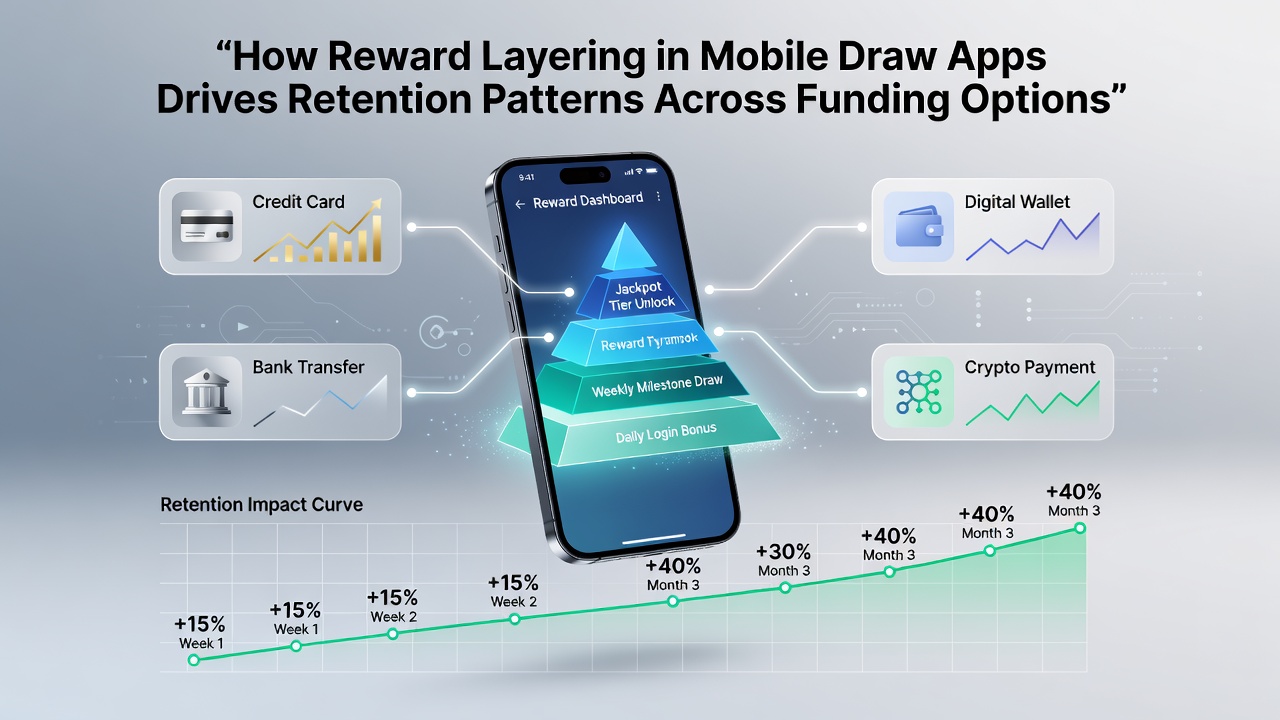
Observers in the digital gaming sector have documented steady growth in mobile draw applications over recent years, where operators combine multiple reward tiers to encourage repeated participation. These structures typically include instant micro-rewards for small actions, mid-level accumulations tied to session length, and premium unlocks available after sustained activity. Data from industry reports indicate that such layering correlates with extended user sessions, especially when paired with flexible funding methods that reduce friction during deposits. Researchers tracking patterns through 2026 note particular spikes in engagement during periods like November when promotional calendars align with seasonal spending habits.
Core Components of Reward Layering Systems
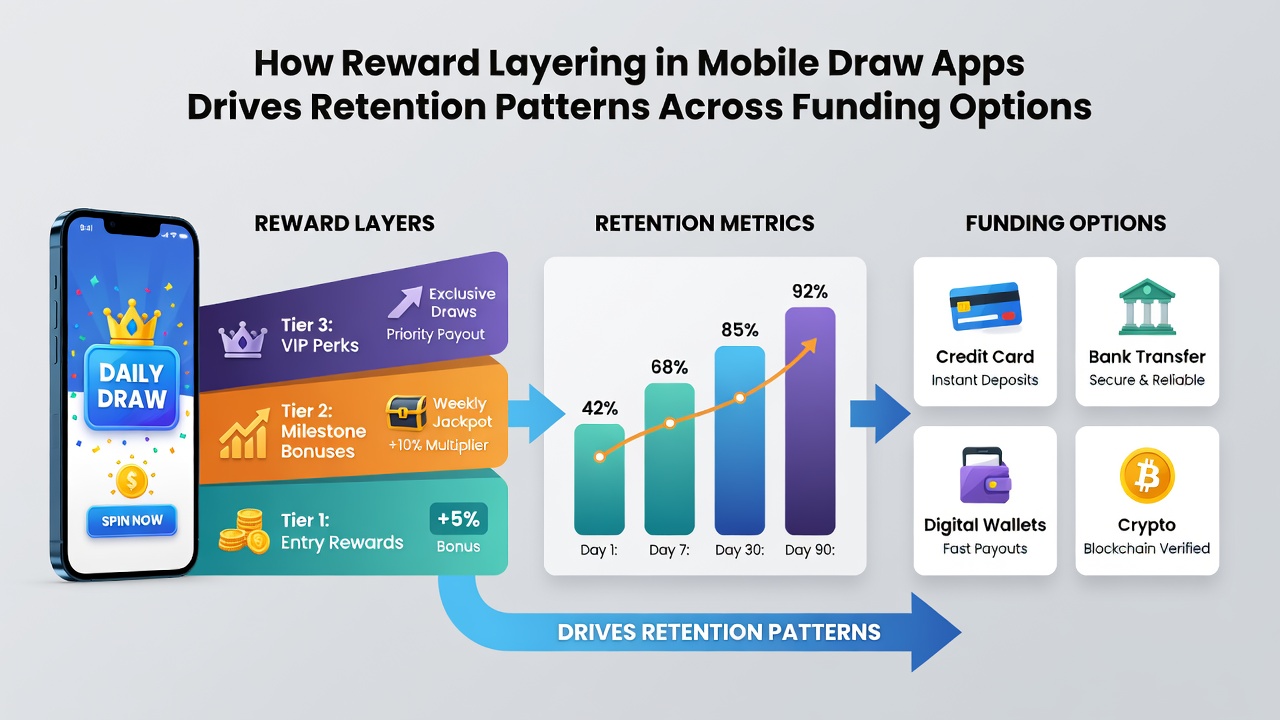
Developers design reward layers to operate simultaneously rather than sequentially, allowing users to earn base points from daily logins while qualifying for bonus multipliers through deposit streaks or referral activity. Studies from academic institutions show this approach creates overlapping motivation loops that adapt to individual spending rhythms. One analysis of aggregated user data revealed that participants accessing three or more simultaneous layers maintained accounts active for an average of 47 percent longer than those limited to single-tier programs. Payment integration plays a central role because instant confirmation of funds often triggers the first layer activation, creating an immediate feedback loop that reinforces continued use.
Funding Options and Their Interaction With Retention Metrics
Users select from various deposit pathways including traditional bank transfers, digital wallets, prepaid cards, and emerging options like cryptocurrency gateways. Evidence collected across multiple platforms demonstrates that wallet-based funding tends to pair most effectively with layered rewards because transactions complete in seconds and immediately credit the initial tier. In contrast, bank transfer users often experience delayed activation of time-sensitive layers, which can interrupt momentum. Figures released by the New Jersey Division of Gaming Enforcement highlight that mobile draw accounts funded through digital wallets showed a 31 percent higher 30-day retention rate compared with those relying on slower verification methods during the first half of 2026. Operators adjust layer timing accordingly, sometimes extending grace periods for certain payment types to maintain parity across user segments.
Observed Patterns in User Behavior Across Payment Categories
Analytics teams monitoring synchronized draw events report distinct retention curves based on funding source. Prepaid card users frequently engage with short-term reward layers focused on quick wins and small top-ups, resulting in higher frequency but shorter overall account lifespans. Cryptocurrency adopters, however, gravitate toward longer accumulation layers because transaction fees encourage larger, less frequent deposits that align with milestone-based unlocks. A case study conducted by researchers at the University of Nevada, Las Vegas tracked 12,000 accounts and found that combining crypto funding with progressive reward tiers increased six-month retention by 28 percent relative to baseline figures. These differences underscore how operators calibrate layer visibility and progression speed to match the transaction characteristics of each funding method.
Platform Adjustments and Data-Driven Refinements
Engineering teams continuously refine layer thresholds using real-time metrics that segment users by deposit velocity and preferred payment rails. When November promotional campaigns introduce holiday-themed multipliers, platforms often temporarily adjust layer requirements for bank-transfer users to offset verification delays. Industry associations tracking these modifications report measurable lifts in cross-funding retention when such adjustments occur. Observers note that successful implementations maintain consistent reward density across categories while varying only the entry triggers, preserving perceived fairness. This calibration process relies on A/B testing frameworks that measure not only session duration but also deposit frequency and layer completion rates within each payment cohort.
Conclusion
Retention patterns in mobile draw applications emerge from the interplay between layered incentive structures and the operational characteristics of different funding options. Available data indicate that platforms achieving balanced activation across payment types sustain higher user continuity throughout the year. As operators refine these systems with region-specific adjustments and seasonal timing, the relationship between reward layering and funding flexibility continues to evolve based on empirical performance indicators.