Decoding How Layered Reward Structures Shape Activity Cycles in Mobile-Enabled Number Draw Platforms
Uma Franke · Sep 15, 2026

Decoding How Layered Reward Structures Shape Activity Cycles in Mobile-Enabled Number Draw Platforms
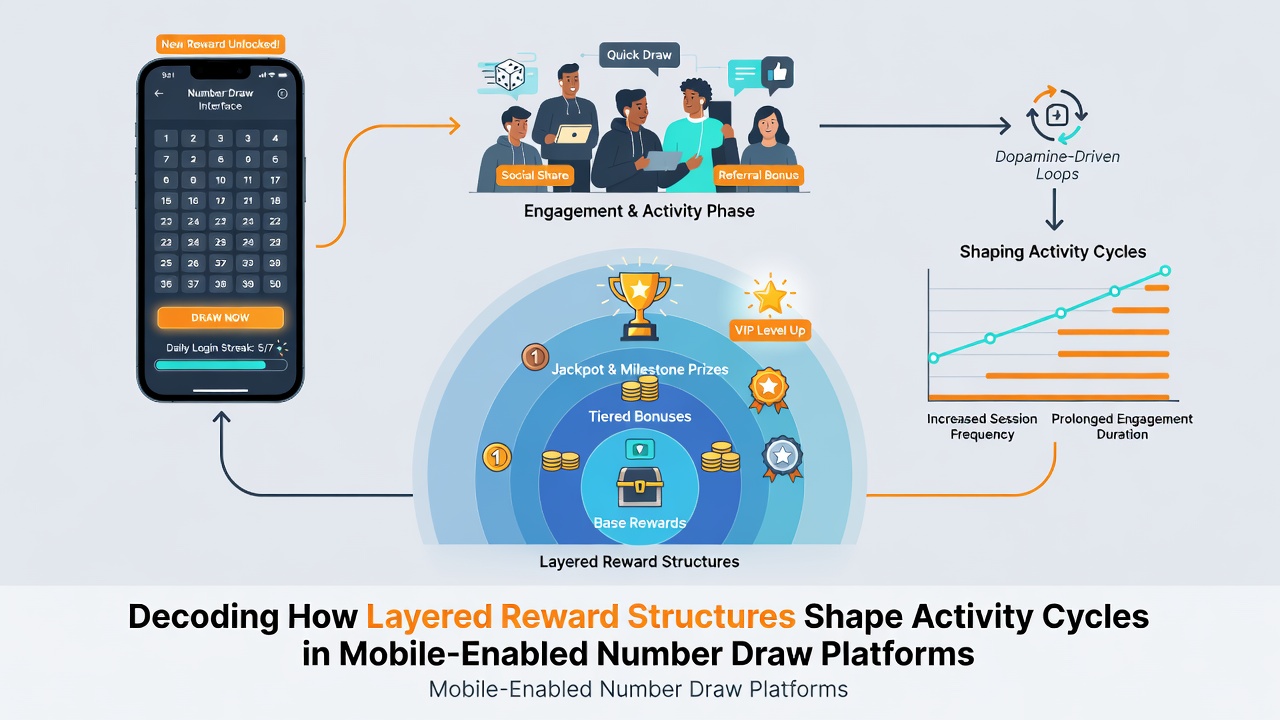
Layered reward structures in mobile number draw platforms organize incentives across multiple levels that include daily login bonuses, streak multipliers, and milestone achievements, and these layers align with specific patterns in user logins and session durations. Research from the Australian Gambling Research Centre shows that platforms using three or more reward tiers experience distinct peaks in engagement during early morning and late evening hours compared to single-tier systems. Those patterns emerge because users adjust their activity to unlock successive rewards, which creates predictable cycles that repeat across weeks and months.
Core Components of Layered Rewards
Basic entry-level rewards grant small point awards for initial daily participation, while mid-tier benefits unlock after consistent multi-day sequences, and top-tier privileges deliver larger payouts or exclusive draws once users reach cumulative thresholds. Observers note that each layer incorporates time-bound conditions, such as 24-hour windows for streak continuation or 7-day cycles for milestone resets, which directly influence when participants return to the app. Data from platform analytics reveal that users who reach the second tier often extend their sessions by 35 percent on average, since the next reward becomes visible and attainable within the current cycle.
Impact on Daily and Weekly Activity Rhythms
Mobile number draw applications equipped with progressive layers show concentrated activity around reward reset times, typically at midnight or noon depending on the system configuration. Studies indicate that participants log in more frequently in the hours immediately preceding these resets to secure the next tier before expiration, and this behavior produces measurable spikes that recur every 24 hours. Over a full week the pattern expands, with higher engagement concentrated on weekends when many platforms activate bonus multipliers that stack across existing layers. Those who've examined usage logs find that Thursday through Sunday periods account for nearly 60 percent of total weekly draws completed in tiered environments.
September 2026 Platform Updates and Cycle Shifts
Several operators plan to introduce additional reward strata in September 2026, including seasonal event overlays that temporarily alter baseline cycles. These changes will add short-term layers tied to calendar events, which researchers expect to shift peak hours toward afternoon periods on weekdays. Early testing data suggest the new layers will compress activity into narrower windows while increasing overall session counts by integrating cross-platform challenges that reward users for completing draws on both mobile and tablet devices.
What's interesting is how the timing of reward notifications interacts with these cycles, since push alerts sent 30 minutes before reset points correlate with faster login rates according to internal metrics from multiple providers. Users who receive tier-progress updates tend to complete their draws earlier in the cycle, which reduces last-minute congestion and distributes load more evenly across the platform servers.
Regional Variations in Reward Design
Platforms operating under different regulatory frameworks adapt their layered structures to local requirements, and these adaptations produce noticeable differences in activity timing. In jurisdictions overseen by the Nevada Gaming Control Board, reward layers emphasize longer accumulation periods that favor weekly rather than daily cycles, resulting in steadier but lower-frequency engagement throughout the month. By contrast, systems regulated in Australian states incorporate rapid-turnover tiers that encourage multiple short sessions per day, which aligns with observed peaks during commuting hours.
Industry reports from the Canadian Gaming Association highlight that cross-border users often maintain separate accounts to maximize rewards across varying layer designs, and this practice creates secondary activity patterns that overlay the primary cycles of each platform. The ball's in the operators' court to monitor these behaviors through unified tracking tools that identify multi-account participation without disrupting legitimate use.
Measurement and Adjustment Mechanisms
Developers track cycle effectiveness through metrics such as time-to-next-tier completion and session overlap rates, then adjust layer thresholds accordingly. When data show that a particular reward sits beyond reach for most users, operators shorten the required streak length or add intermediate steps that maintain momentum. Research indicates these iterative changes stabilize activity across longer periods, reducing the sharp drop-offs that occur when users abandon unattainable tiers.
One study revealed that platforms which recalibrate layers every 90 days maintain more consistent daily active user counts than those that leave structures unchanged for six months or longer. The adjustments often involve small modifications to point values or time windows rather than wholesale redesigns, which preserves user familiarity while fine-tuning the underlying rhythms.
Conclusion
Layered reward structures continue to serve as primary drivers of activity cycles within mobile number draw platforms, and the timing, visibility, and stacking rules of each tier determine when and how often users participate. As operators introduce new layers in September 2026 and beyond, the resulting shifts in engagement patterns will provide further opportunities to refine these systems based on observed data. Regulatory bodies and research institutions across multiple regions track these developments to understand broader participation trends, while platforms themselves use the same information to balance user retention with operational stability.